Microsoft Oceans
Mysterious Relationships

Tiny cleaner fish dare to floss a moray eel's teeth — and live to tell the tale!

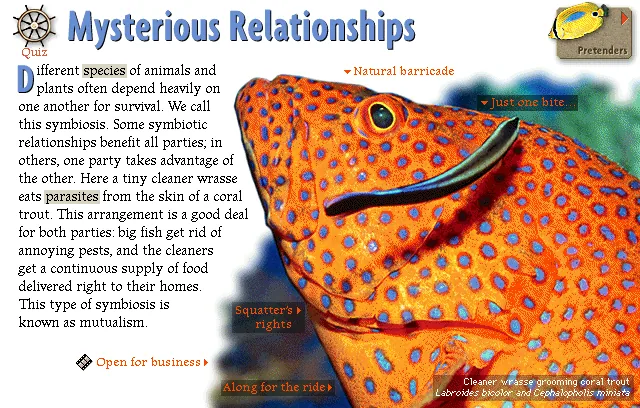
Different species of animals and plants often depend heavily on one another for survival. We call this symbiosis. Some symbiotic relationships benefit all parties; in others, one party takes advantage of the other. Here a tiny cleaner wrasse eats parasites from the skin of a coral trout. This arrangement is a good deal for both parties: big fish get rid of annoying pests, and the cleaners get a continuous supply of food delivered right to their homes. This type of symbiosis is known as mutualism.

Explore

Along for the ride

Along for the ride

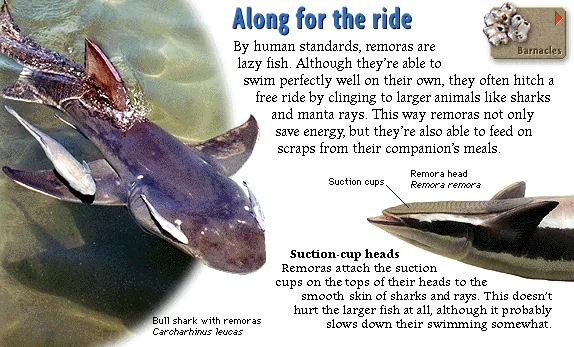
By human standards, remoras are lazy fish. Although they're able to swim perfectly well on their own, they often hitch a free ride by clinging to larger animals like sharks and manta rays. This way remoras not only save energy, but they're also able to feed on scraps from their companion's meals.

Suction-cup headsRemoras attach the suction cups on the tops of their heads to the smooth skin of sharks and rays. This doesn't hurt the larger fish at all, although it probably slows down their swimming somewhat.
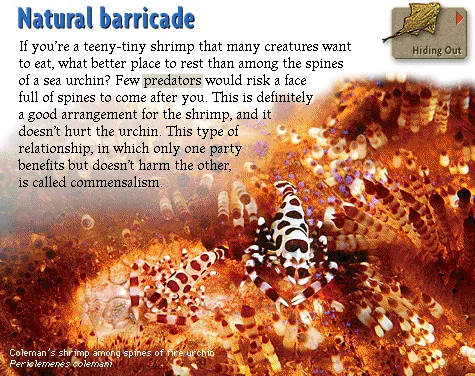
Natural barricade

Natural barricade

If you're a teeny-tiny shrimp that many creatures want to eat, what better place to rest than among the spines of a sea urchin? Few predators would risk a face full of spines to come after you. This is definitely a good arrangement for the shrimp, and it doesn't hurt the urchin. This type of relationship, in which only one party benefits but doesn't harm the other, is called commensalism.

Squatter's rights

Squatter's rights

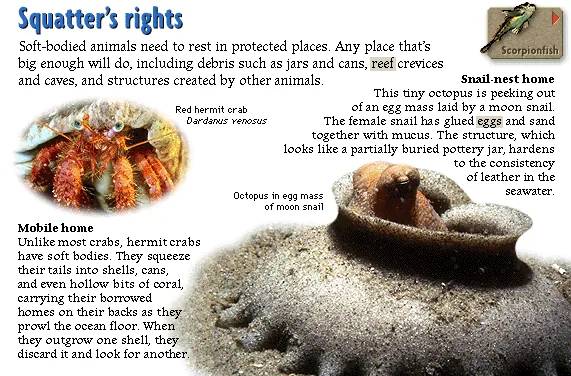
Soft-bodied animals need to rest in protected places. Any place that's big enough will do, including debris such as jars and cans, reef crevices and caves, and structures created by other animals.

Mobile homeUnlike most crabs, hermit crabs have soft bodies. They squeeze their tails into shells, cans, and even hollow bits of coral, carrying their borrowed homes on their backs as they prowl the ocean floor. When they outgrow one shell, they discard it and look for another.
Snail-nest homeThis tiny octopus is peeking out of an egg mass laid by a moon snail. The female snail has glued eggs and sand together with mucus. The structure, which looks like a partially buried pottery jar, hardens to the consistency of leather in the seawater.
Just one bite...

Just one bite...

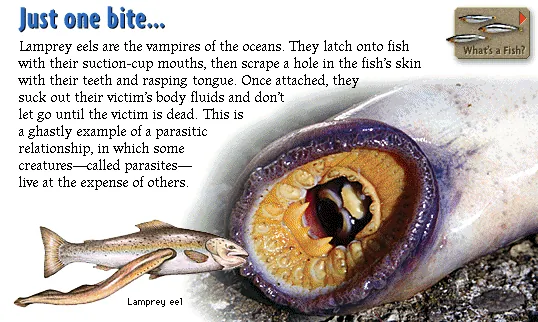
Lamprey eels are the vampires of the oceans. They latch onto fish with their suction-cup mouths, then scrape a hole in the fish's skin with their teeth and rasping tongue. Once attached, they suck out their victim's body fluids and don't let go until the victim is dead. This is a ghastly example of a parasitic relationship, in which some creatures—called parasites—live at the expense of others.

Watch

Open for business — Some tiny fish and shrimp specialize in the cleaning business. They establish "cleaning stations" in their communities and sometimes do elaborate dances to advertise. Big fish and even snaggle-toothed moray eels come to these locations regularly to have parasites and even debris removed from their skin, and even from their gills and mouths. Even the most ferocious-looking predators realize the value of this service and somehow curb the urge to swallow the cleaning crew.

Dive deeper

Source: Microsoft Oceans (1995) CD-ROM. Text liberated from original screen art; images, audio & clips restored from disc. Original media is Microsoft/supplier copyright — non-commercial educational preservation. Credits & Acknowledgements