Ancient shores
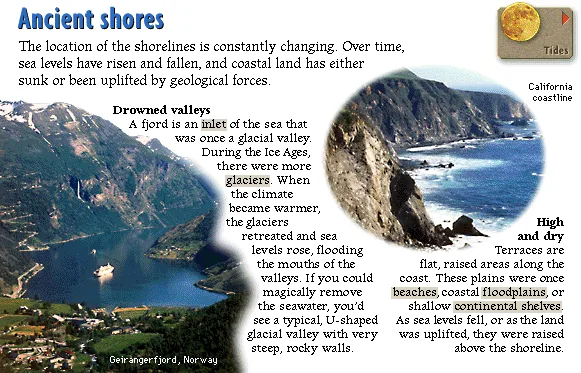
The location of the shorelines is constantly changing. Over time, sea levels have risen and fallen, and coastal land has either sunk or been uplifted by geological forces.
Where the ocean crashes into the land, tough creatures hang on for dear life.
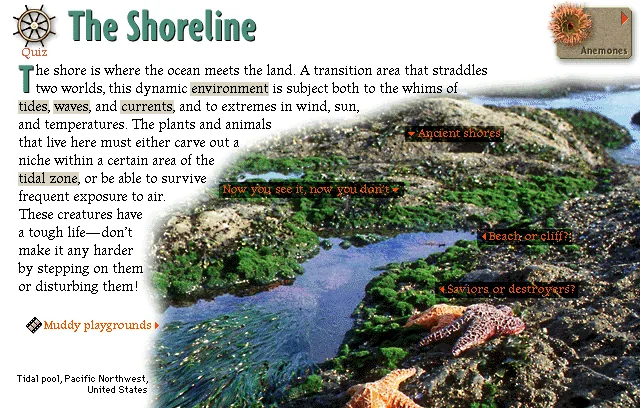
The shore is where the ocean meets the land. A transition area that straddles two worlds, this dynamic environment is subject both to the whims of tides, waves, and currents, and to extremes in wind, sun, and temperatures. The plants and animals that live here must either carve out a niche within a certain area of the tidal zone, or be able to survive frequent exposure to air. These creatures have a tough life—don't make it any harder by stepping on them or disturbing them!

The location of the shorelines is constantly changing. Over time, sea levels have risen and fallen, and coastal land has either sunk or been uplifted by geological forces.

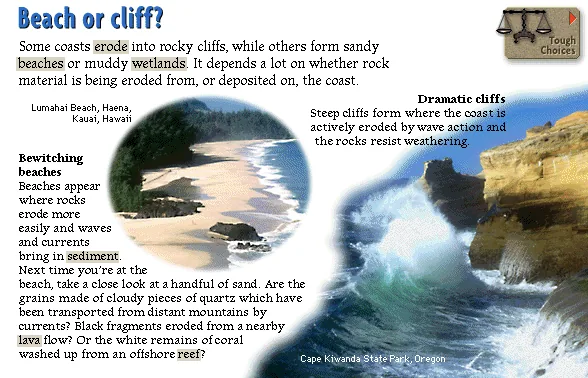
Some coasts erode into rocky cliffs, while others form sandy beaches or muddy wetlands. It depends a lot on whether rock material is being eroded from, or deposited on, the coast.

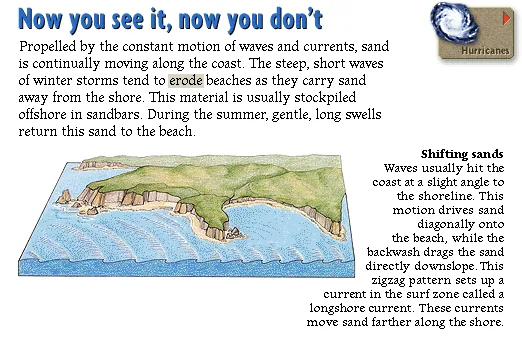
Propelled by the constant motion of waves and currents, sand is continually moving along the coast. The steep, short waves of winter storms tend to erode beaches as they carry sand away from the shore. This material is usually stockpiled offshore in sandbars. During the summer, gentle, long swells return this sand to the beach.

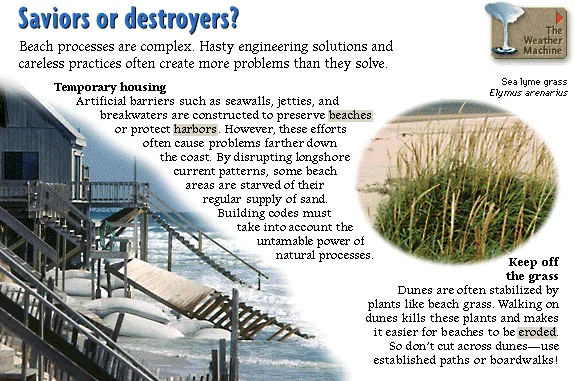
Beach processes are complex. Hasty engineering solutions and careless practices often create more problems than they solve.
Muddy playgrounds — Fish and crustaceans shelter and raise their young among the tangled roots of mangroves in tropical and subtropical coastal waters.
Source: Microsoft Oceans (1995) CD-ROM. Text liberated from original screen art; images, audio & clips restored from disc. Original media is Microsoft/supplier copyright — non-commercial educational preservation. Credits & Acknowledgements