Young and restless
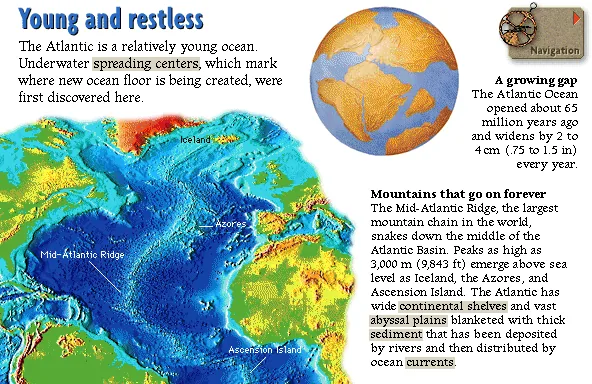
The Atlantic is a relatively young ocean. Underwater spreading centers, which mark where new ocean floor is being created, were first discovered here.
The stormy "Dark Sea" that launched the age of exploration
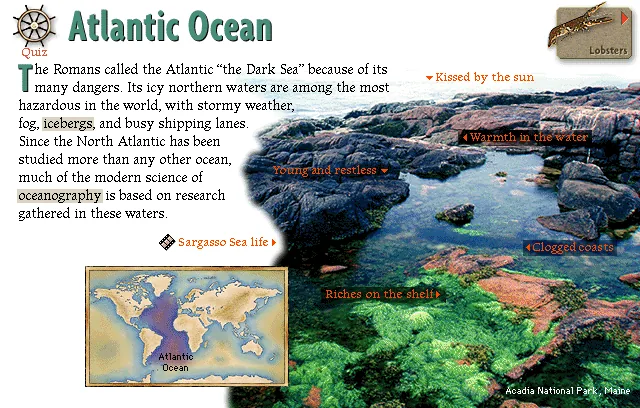
The Romans called the Atlantic "the Dark Sea" because of its many dangers. Its icy northern waters are among the most hazardous in the world, with stormy weather, fog, icebergs, and busy shipping lanes. Since the North Atlantic has been studied more than any other ocean, much of the modern science of oceanography is based on research gathered in these waters.

The Atlantic is a relatively young ocean. Underwater spreading centers, which mark where new ocean floor is being created, were first discovered here.

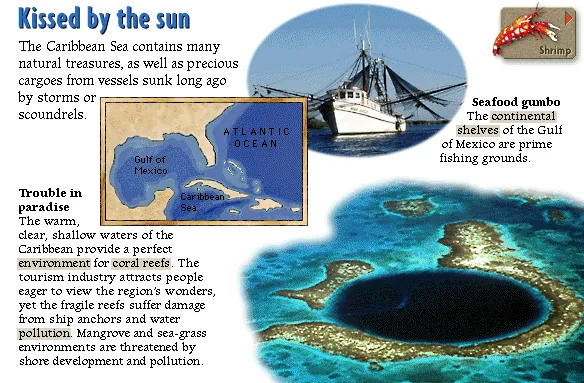
The Caribbean Sea contains many natural treasures, as well as precious cargoes from vessels sunk long ago by storms or scoundrels.

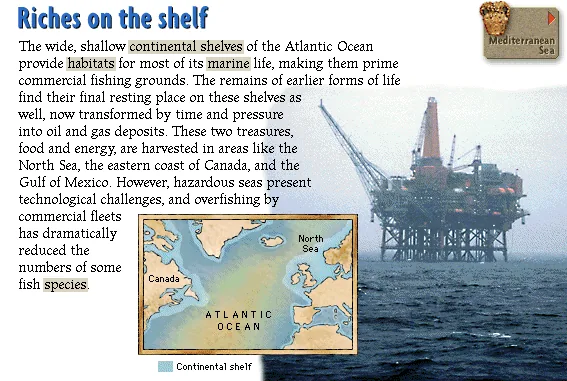
The wide, shallow continental shelves of the Atlantic Ocean provide habitats for most of its marine life, making them prime commercial fishing grounds. The remains of earlier forms of life find their final resting place on these shelves as well, now transformed by time and pressure into oil and gas deposits. These two treasures, food and energy, are harvested in areas like the North Sea, the eastern coast of Canada, and the Gulf of Mexico. However, hazardous seas present technological challenges, and overfishing by commercial fleets has dramatically reduced the numbers of some fish species.

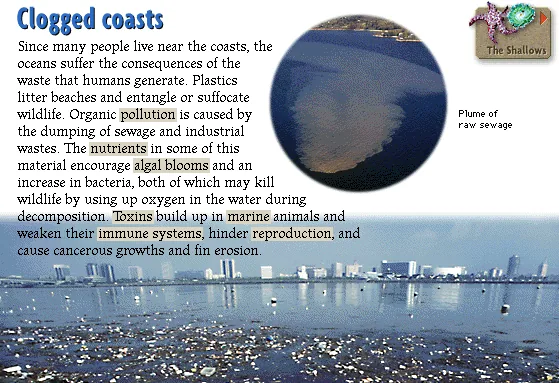
Since many people live near the coasts, the oceans suffer the consequences of the waste that humans generate. Plastics litter beaches and entangle or suffocate wildlife. Organic pollution is caused by the dumping of sewage and industrial wastes. The nutrients in some of this material encourage algal blooms and an increase in bacteria, both of which may kill wildlife by using up oxygen in the water during decomposition. Toxins build up in marine animals and weaken their immune systems, hinder reproduction, and cause cancerous growths and fin erosion.

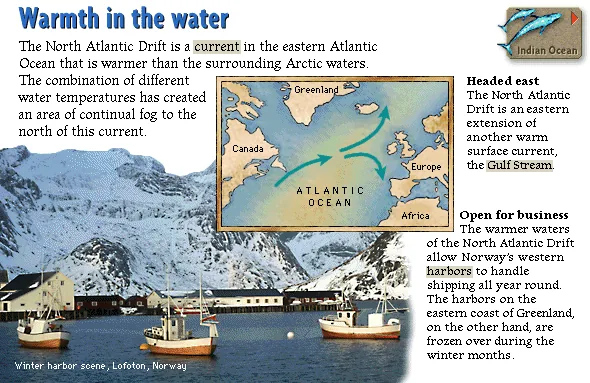
The North Atlantic Drift is a current in the eastern Atlantic Ocean that is warmer than the surrounding Arctic waters. The combination of different water temperatures has created an area of continual fog to the north of this current.
Sargasso Sea life — A sargassum fish, camouflaged by its yellow and brown coloring, lurks among floating sargassum weed in the calm, clear waters of the Sargasso Sea.
Source: Microsoft Oceans (1995) CD-ROM. Text liberated from original screen art; images, audio & clips restored from disc. Original media is Microsoft/supplier copyright — non-commercial educational preservation. Credits & Acknowledgements