Drinking seawater
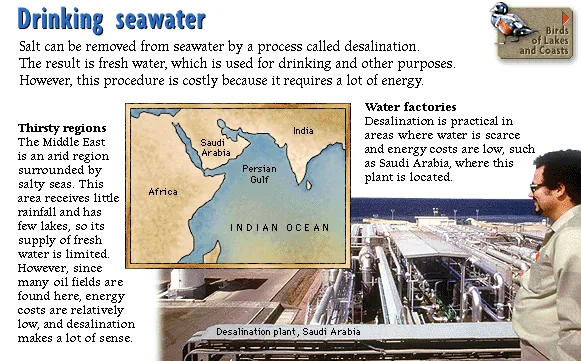
Salt can be removed from seawater by a process called desalination. The result is fresh water, which is used for drinking and other purposes. However, this procedure is costly because it requires a lot of energy.
Earth's endless journey — from cloud to sea and back again.
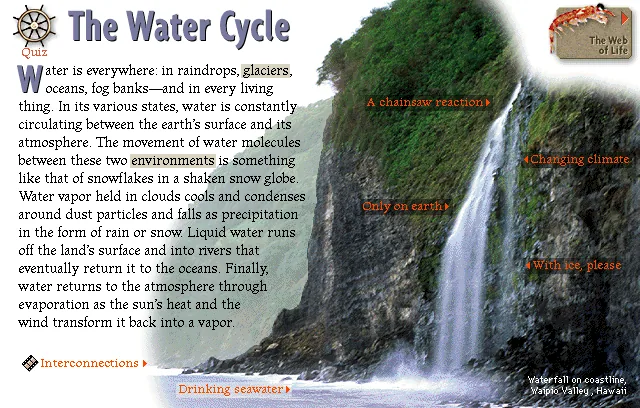
Water is everywhere: in raindrops, glaciers, oceans, fog banks—and in every living thing. In its various states, water is constantly circulating between the earth's surface and its atmosphere. The movement of water molecules between these two environments is something like that of snowflakes in a shaken snow globe. Water vapor held in clouds cools and condenses around dust particles and falls as precipitation in the form of rain or snow. Liquid water runs off the land's surface and into rivers that eventually return it to the oceans. Finally, water returns to the atmosphere through evaporation as the sun's heat and the wind transform it back into a vapor.

Salt can be removed from seawater by a process called desalination. The result is fresh water, which is used for drinking and other purposes. However, this procedure is costly because it requires a lot of energy.

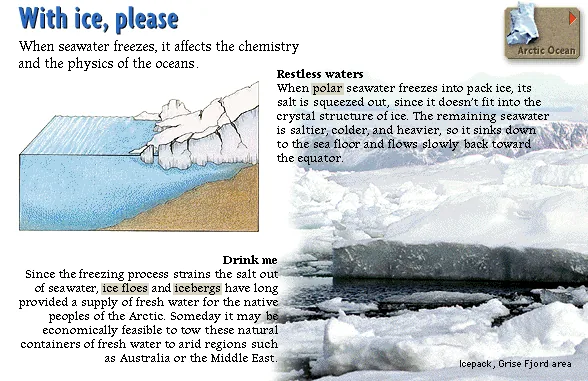
When seawater freezes, it affects the chemistry and the physics of the oceans.

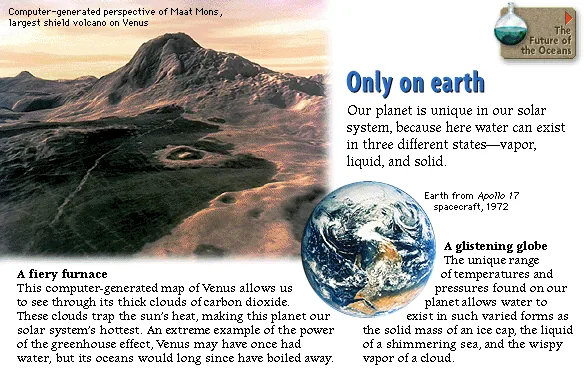
Our planet is unique in our solar system, because here water can exist in three different states—vapor, liquid, and solid.

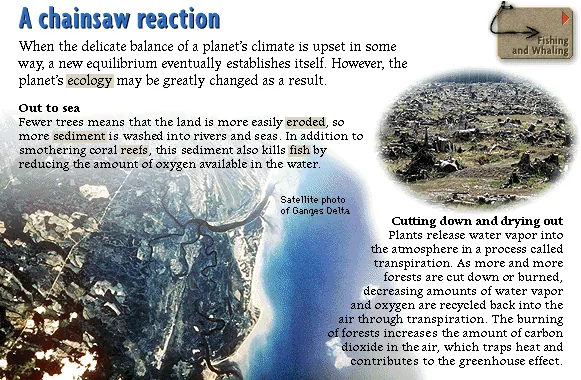
When the delicate balance of a planet's climate is upset in some way, a new equilibrium eventually establishes itself. However, the planet's ecology may be greatly changed as a result.

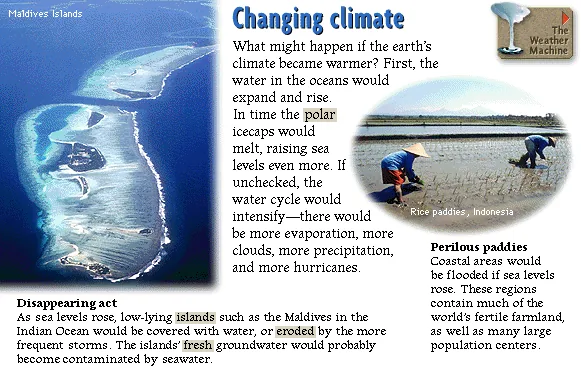
What might happen if the earth's climate became warmer? First, the water in the oceans would expand and rise. In time the polar icecaps would melt, raising sea levels even more. If unchecked, the water cycle would intensify—there would be more evaporation, more clouds, more precipitation, and more hurricanes.
Interconnections — The water cycle is constantly moving water from the oceans, to the atmosphere, to land, and back to the oceans. Chemicals dumped on land and in rivers end up in the ocean. From there, some compounds that don't break down may be carried back into the atmosphere and then back to our drinking water. Although our planetary plumbing system is gigantic, it's the only one we've got. We need to make sure that there will always be clean water for creatures everywhere on earth.
Source: Microsoft Oceans (1995) CD-ROM. Text liberated from original screen art; images, audio & clips restored from disc. Original media is Microsoft/supplier copyright — non-commercial educational preservation. Credits & Acknowledgements