Microsoft Oceans
The Web of Life
The Web of Life

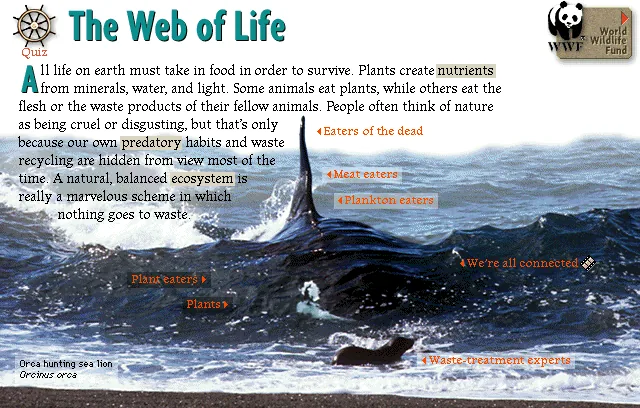
Every ocean creature is part of a bigger story — and nothing goes to waste.

All life on earth must take in food in order to survive. Plants create nutrients from minerals, water, and light. Some animals eat plants, while others eat the flesh or the waste products of their fellow animals. People often think of nature as being cruel or disgusting, but that's only because our own predatory habits and waste recycling are hidden from view most of the time. A natural, balanced ecosystem is really a marvelous scheme in which nothing goes to waste.

Explore

Plants

Plants

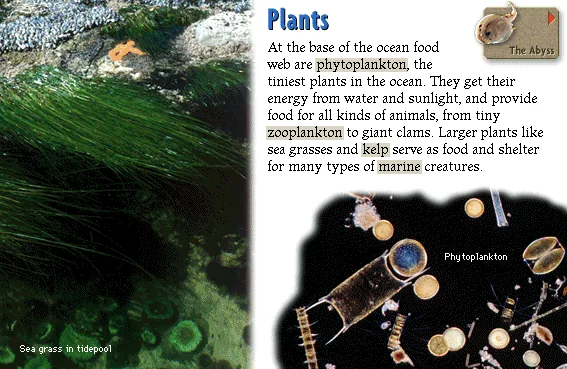
At the base of the ocean food web are phytoplankton, the tiniest plants in the ocean. They get their energy from water and sunlight, and provide food for all kinds of animals, from tiny zooplankton to giant clams. Larger plants like sea grasses and kelp serve as food and shelter for many types of marine creatures.

Sea grass in tidepoolSea grass in tidepool
PhytoplanktonPhytoplankton
Plant eaters

Plant eaters

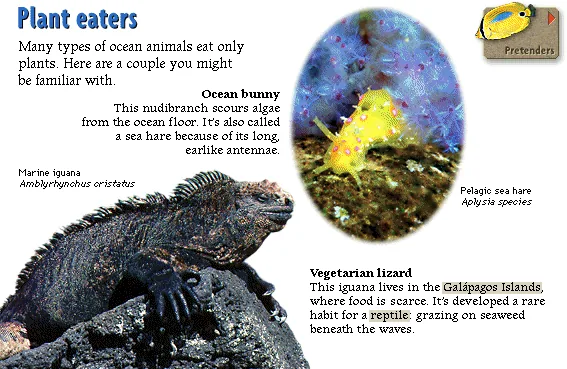
Many types of ocean animals eat only plants. Here are a couple you might be familiar with. Ocean bunny This nudibranch scours algae from the ocean floor. It's also called a sea hare because of its long, earlike antennae. Vegetarian lizard This iguana lives in the Galápagos Islands, where food is scarce. It's developed a rare habit for a reptile: grazing on seaweed beneath the waves.

Marine iguanaAmblyrhynchus cristatus
Pelagio sea hareAplysia species
Plankton eaters

Plankton eaters

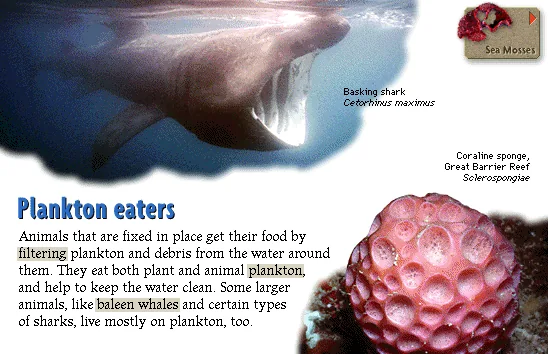
Animals that are fixed in place get their food by filtering plankton and debris from the water around them. They eat both plant and animal plankton, and help to keep the water clean. Some larger animals, like baleen whales and certain types of sharks, live mostly on plankton, too.

Basking sharkCetorhinius maximus
Coraline sponge, Great Barrier ReefSclerospongiae
Meat eaters

Meat eaters

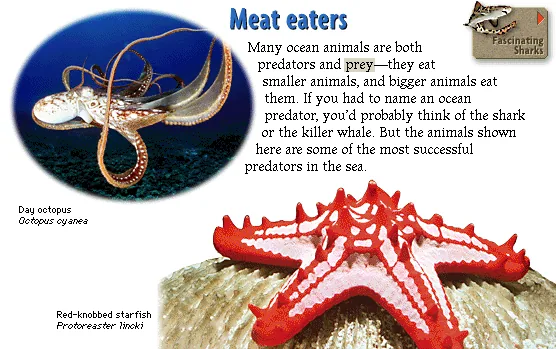
Many ocean animals are both predators and prey—they eat smaller animals, and bigger animals eat them. If you had to name an ocean predator, you'd probably think of the shark or the killer whale. But the animals shown here are some of the most successful predators in the sea.

Day octopusOctopus cyanea
Red-knobbed starfishProtoreaster Nooki
Eaters of the dead

Eaters of the dead

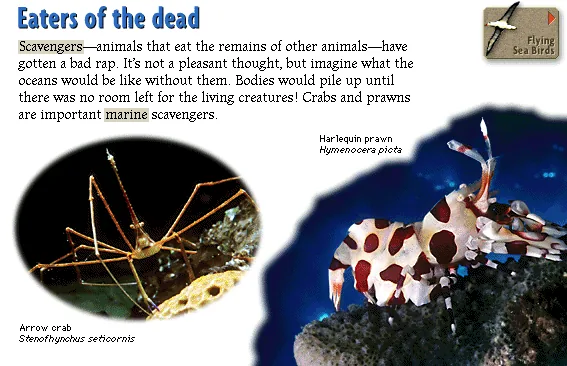
Scavengers—animals that eat the remains of other animals—have gotten a bad rap. It's not a pleasant thought, but imagine what the oceans would be like without them. Bodies would pile up until there was no room left for the living creatures! Crabs and prawns are important marine scavengers.

Arrow crabStenothynochus seticornis
Harlequin prawnHymenocea picta
Waste-treatment experts

Waste-treatment experts

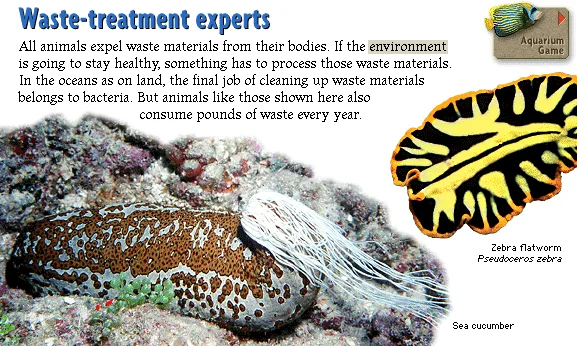
All animals expel waste materials from their bodies. If the environment is going to stay healthy, something has to process those waste materials. In the oceans as on land, the final job of cleaning up waste materials belongs to bacteria. But animals like those shown here also consume pounds of waste every year.

Zebra flatwormPseudoceros zebra
Sea cucumberSea cucumber

Watch

We're all connected — Diver feeding sea urchin to wolf eel

Source: Microsoft Oceans (1995) CD-ROM. Text liberated from original screen art; images, audio & clips restored from disc. Original media is Microsoft/supplier copyright — non-commercial educational preservation. Credits & Acknowledgements