Similar but not the same
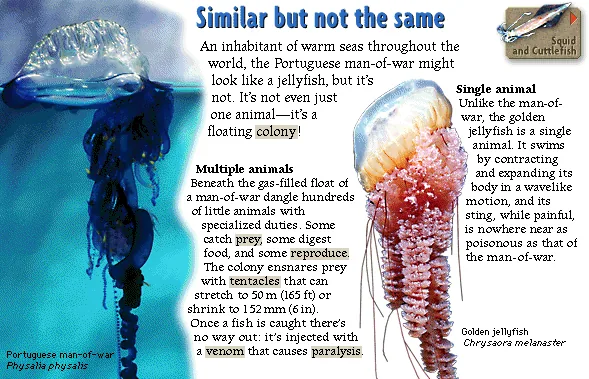
An inhabitant of warm seas throughout the world, the Portuguese man-of-war might look like a jellyfish, but it's not. It's not even just one animal—it's a floating colony!
98% water and 100% sting — these beautiful, drifting blobs rule the ocean!
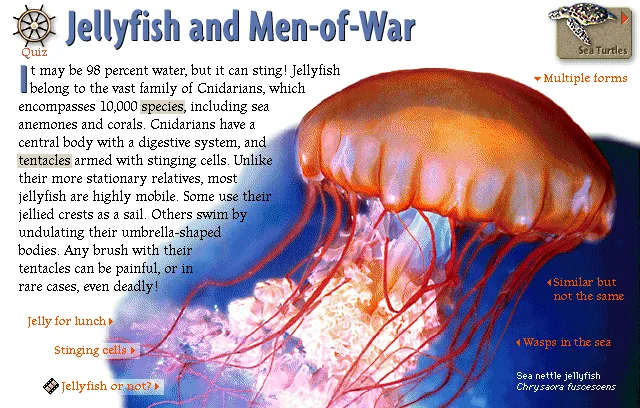
It may be 98 percent water, but it can sting! Jellyfish belong to the vast family of Cnidarians, which encompasses 10,000 species, including sea anemones and corals. Cnidarians have a central body with a digestive system, and tentacles armed with stinging cells. Unlike their more stationary relatives, most jellyfish are highly mobile. Some use their jellied crests as a sail. Others swim by undulating their umbrella-shaped bodies. Any brush with their tentacles can be painful, or in rare cases, even deadly!

An inhabitant of warm seas throughout the world, the Portuguese man-of-war might look like a jellyfish, but it's not. It's not even just one animal—it's a floating colony!

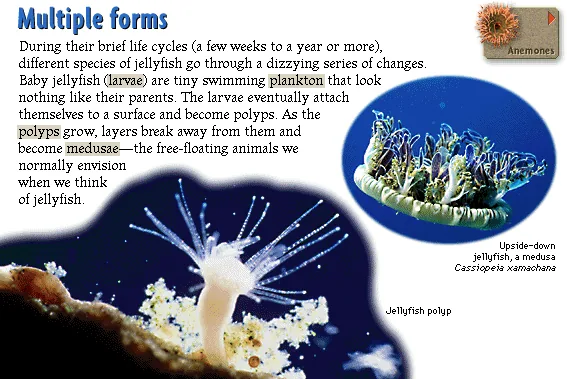
During their brief life cycles (a few weeks to a year or more), different species of jellyfish go through a dizzying series of changes. Baby jellyfish (larvae) are tiny swimming plankton that look nothing like their parents. The larvae eventually attach themselves to a surface and become polyps. As the polyps grow, layers break away from them and become medusae—the free-floating animals we normally envision when we think of jellyfish.

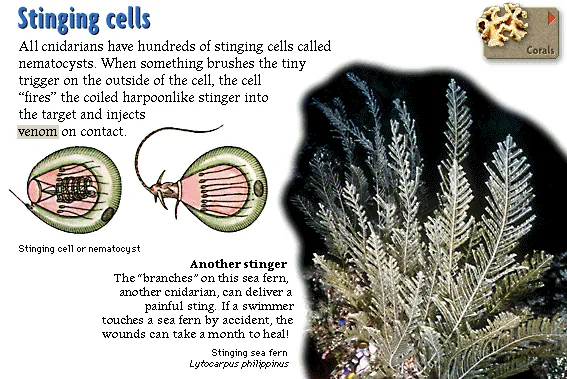
All cnidarians have hundreds of stinging cells called nematocysts. When something brushes the tiny trigger on the outside of the cell, the cell "fires" the coiled harpoonlike stinger into the target and injects venom on contact.

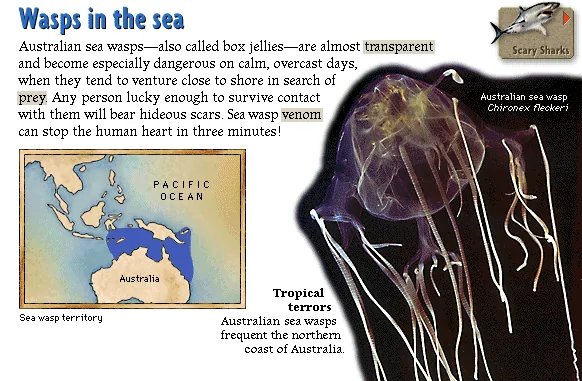
Australian sea wasps—also called box jellies—are almost transparent and become especially dangerous on calm, overcast days, when they tend to venture close to shore in search of prey. Any person lucky enough to survive contact with them will bear hideous scars. Sea wasp venom can stop the human heart in three minutes!

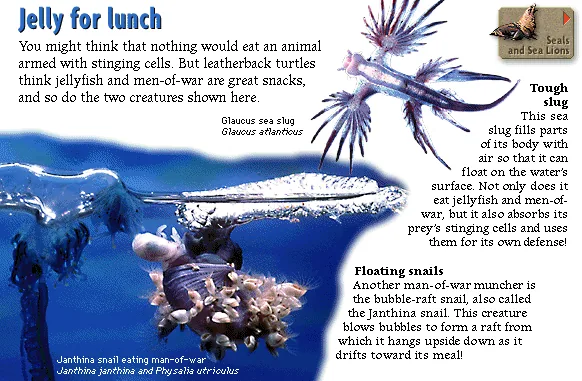
You might think that nothing would eat an animal armed with stinging cells. But leatherback turtles think jellyfish and men-of-war are great snacks, and so do the two creatures shown here.
Jellyfish or not? — Many jellyfish are beautiful, with transparent bodies tinged with red, green, pink, or even violet. Several species are bioluminescent, and can make waterways sparkle at night. But not all glowing transparent sea creatures are jellyfish. The diver on the right is studying a chain of salps, which reproduce by budding.
Source: Microsoft Oceans (1995) CD-ROM. Text liberated from original screen art; images, audio & clips restored from disc. Original media is Microsoft/supplier copyright — non-commercial educational preservation. Credits & Acknowledgements