Microsoft Oceans
Sea Turtles
Sea Turtles
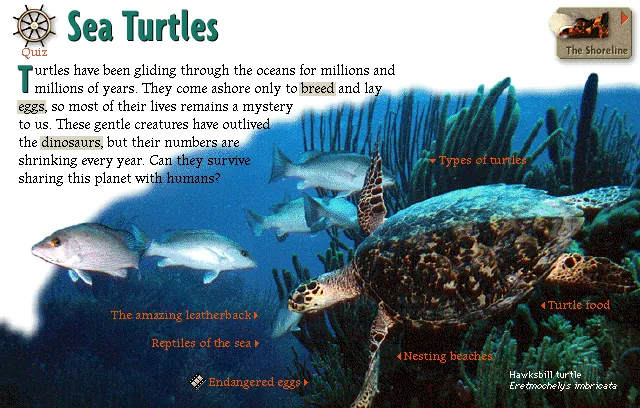
Eretmochelys imbricata

Ancient ocean travelers that outlasted the dinosaurs — but can they survive us?

Turtles have been gliding through the oceans for millions and millions of years. They come ashore only to breed and lay eggs, so most of their lives remains a mystery to us. These gentle creatures have outlived the dinosaurs, but their numbers are shrinking every year. Can they survive sharing this planet with humans?

Explore

Types of turtles

Types of turtles

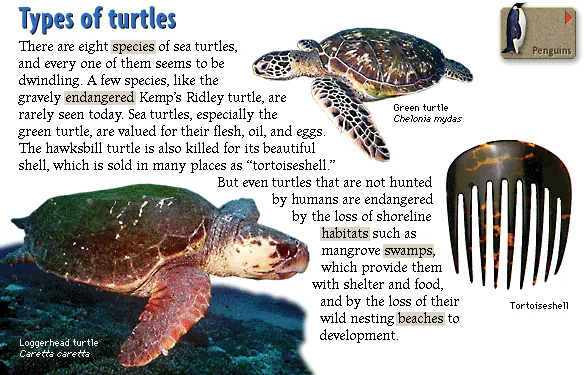
There are eight species of sea turtles, and every one of them seems to be dwindling. A few species, like the gravely endangered Kemp's Ridley turtle, are rarely seen today. Sea turtles, especially the green turtle, are valued for their flesh, oil, and eggs. The hawksbill turtle is also killed for its beautiful shell, which is sold in many places as "tortoiseshell." But even turtles that are not hunted by humans are endangered by the loss of shoreline habitats such as mangrove swamps, which provide them with shelter and food, and by the loss of their wild nesting beaches to development.

Green turtleChelonia mydas
Loggerhead turtleCaretta caretta
TortoiseshellHawksbill shell sold in many places as "tortoiseshell"
Turtle food

Turtle food

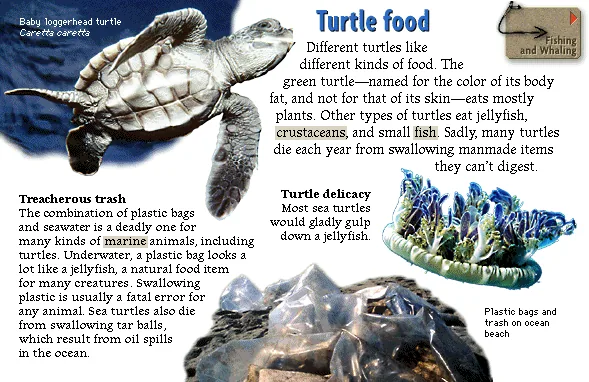
Different turtles like different kinds of food. The green turtle—named for the color of its body fat, and not for that of its skin—eats mostly plants. Other types of turtles eat jellyfish, crustaceans, and small fish. Sadly, many turtles die each year from swallowing manmade items they can't digest.

Baby loggerhead turtleCaretta caretta
Treacherous trashThe combination of plastic bags and seawater is a deadly one for many kinds of marine animals, including turtles. Underwater, a plastic bag looks a lot like a jellyfish, a natural food item for many creatures. Swallowing plastic is usually a fatal error for any animal. Sea turtles also die from swallowing tar balls, which result from oil spills in the ocean.
Turtle delicacyMost sea turtles would gladly gulp down a jellyfish.
Plastic bags and trash on ocean beachPlastic bags and trash on ocean beach
Reptiles of the sea

Reptiles of the sea

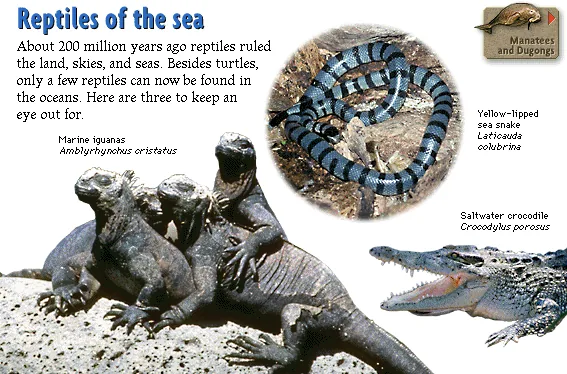
About 200 million years ago reptiles ruled the land, skies, and seas. Besides turtles, only a few reptiles can now be found in the oceans. Here are three to keep an eye out for.

Marine iguanasAmblyrhynchus cristatus
Yellow-lipped sea snakeLaticauda colubrina
Saltwater crocodileCrocodylus porosus
The amazing leatherback

The amazing leatherback

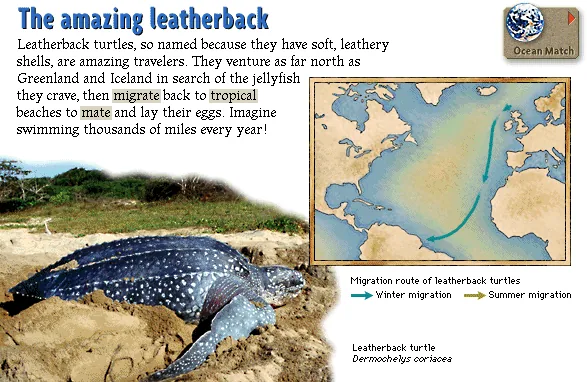
Leatherback turtles, so named because they have soft, leathery shells, are amazing travelers. They venture as far north as Greenland and Iceland in search of the jellyfish they crave, then migrate back to tropical beaches to mate and lay their eggs. Imagine swimming thousands of miles every year!

Leatherback turtleDermochelys coriacea
Migration route of leatherback turtlesWinter migration and Summer migration
Nesting beaches

Nesting beaches

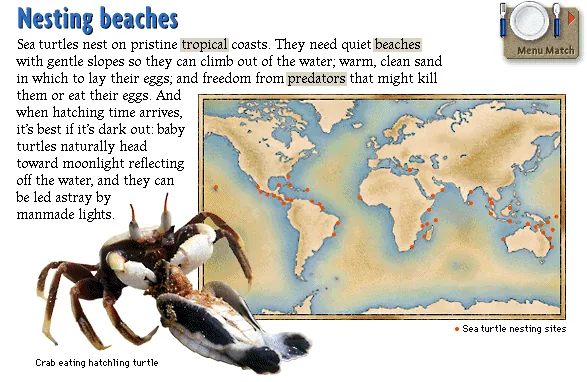
Sea turtles nest on pristine tropical coasts. They need quiet beaches with gentle slopes so they can climb out of the water; warm, clean sand in which to lay their eggs; and freedom from predators that might kill them or eat their eggs. And when hatching time arrives, it's best if it's dark out: baby turtles naturally head toward moonlight reflecting off the water, and they can be led astray by manmade lights.

Crab eating hatchling turtleCrab eating hatchling turtle
Sea turtle nesting sitesSea turtle nesting sites

Watch

Endangered eggs — Loggerhead sea turtle nesting, Caretta caretta

Dive deeper

Source: Microsoft Oceans (1995) CD-ROM. Text liberated from original screen art; images, audio & clips restored from disc. Original media is Microsoft/supplier copyright — non-commercial educational preservation. Credits & Acknowledgements