Ready for delivery
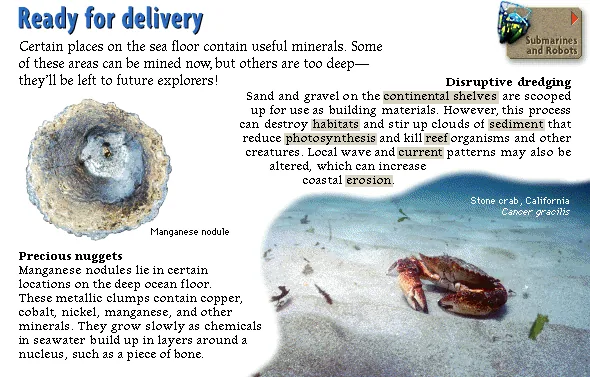
Certain places on the sea floor contain useful minerals. Some of these areas can be mined now, but others are too deep—they'll be left to future explorers!
A treasure chest of gold, oil, and gems is hiding beneath the waves!
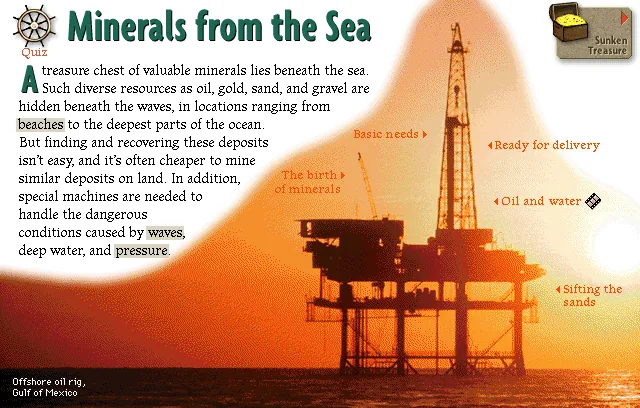
A treasure chest of valuable minerals lies beneath the sea. Such diverse resources as oil, gold, sand, and gravel are hidden beneath the waves, in locations ranging from beaches to the deepest parts of the ocean. But finding and recovering these deposits isn't easy, and it's often cheaper to mine similar deposits on land. In addition, special machines are needed to handle the dangerous conditions caused by waves, deep water, and pressure.

Certain places on the sea floor contain useful minerals. Some of these areas can be mined now, but others are too deep—they'll be left to future explorers!

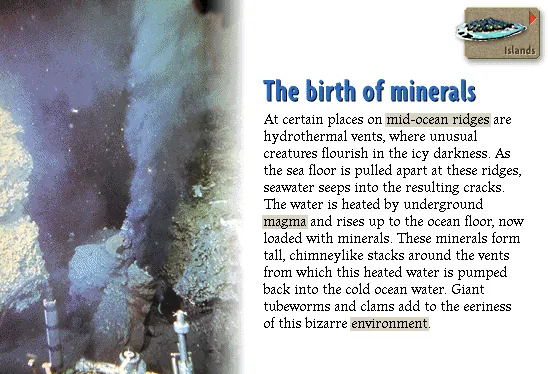
At certain places on mid-ocean ridges are hydrothermal vents, where unusual creatures flourish in the icy darkness. As the sea floor is pulled apart at these ridges, seawater seeps into the resulting cracks. The water is heated by underground magma and rises up to the ocean floor, now loaded with minerals. These minerals form tall, chimneylike stacks around the vents from which this heated water is pumped back into the cold ocean water. Giant tubeworms and clams add to the eeriness of this bizarre environment.

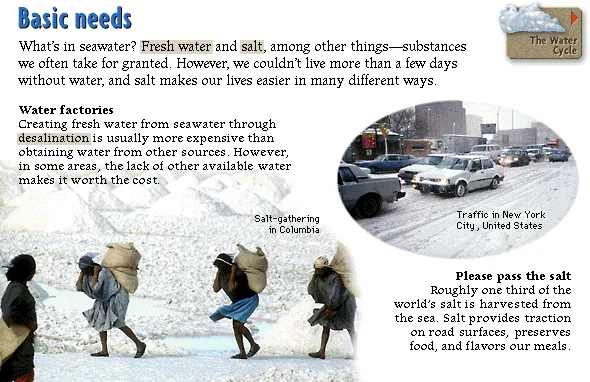
What's in seawater? Fresh water and salt, among other things—substances we often take for granted. However, we couldn't live more than a few days without water, and salt makes our lives easier in many different ways.

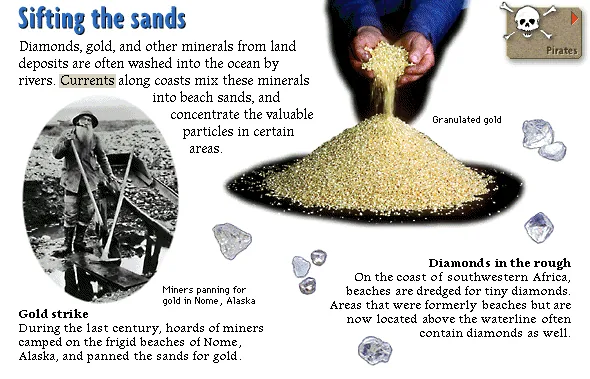
Diamonds, gold, and other minerals from land deposits are often washed into the ocean by rivers. Currents along coasts mix these minerals into beach sands, and concentrate the valuable particles in certain areas.
Oil and water — Oil and gas are created from the remains of tiny plants and animals that lived long ago. After these organisms died, they fell to the ocean floor and were buried by sediment. Over time, pressure and heat transformed them into petroleum. The shallow continental shelves hold most of the oceans' oil and gas fields. Although we need these petroleum deposits for transportation and industry, they must be handled carefully so that they won't pollute the sea and harm its creatures.
Source: Microsoft Oceans (1995) CD-ROM. Text liberated from original screen art; images, audio & clips restored from disc. Original media is Microsoft/supplier copyright — non-commercial educational preservation. Credits & Acknowledgements